
Why the World Walked Away from Gold
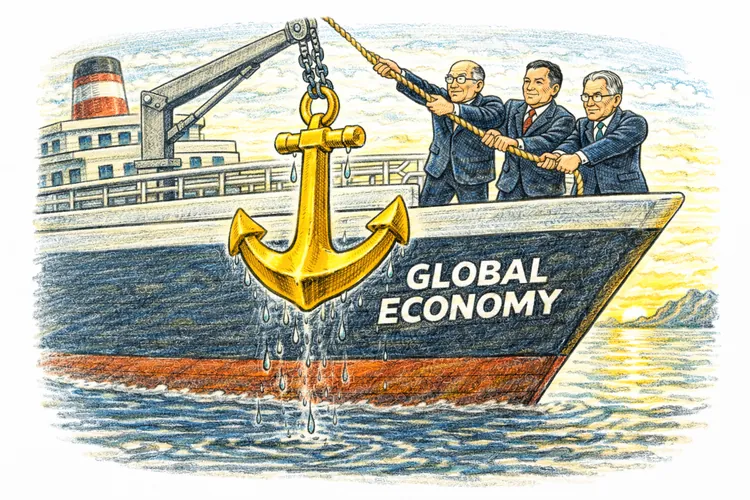
The world didn’t abandon gold in a single dramatic moment.
It backed away from it—step by step—each time discovering that the system designed to create stability made survival harder.
The break with gold was not ideological.
It was pragmatic.
The First Crack: War
The classical gold standard was built for peace.
War broke it immediately.
World War I required:
- massive public spending
- rapid borrowing
- money creation on a scale gold simply could not support
Countries suspended convertibility, printed money, and promised to return to gold later.
That promise turned out to be harder to keep than expected.
The Interwar Illusion
After the war, many countries tried to restore the gold standard.
On paper, it looked like a return to normality.
In practice, it was a fragile imitation.
Currencies were misaligned.
Debts were heavy.
Economic conditions were uneven.
Gold imposed the same rules on very different economies—and something had to give.
The Great Depression: The Stress Test Gold Failed
The Great Depression was the moment of truth.
Demand collapsed.
Banks failed.
Unemployment surged.
Under the gold standard, governments had limited options:
- they couldn’t expand money supply easily
- they couldn’t devalue freely
- they couldn’t respond quickly
The result was deflation—rising real debt burdens and falling prices.
Countries that left gold earlier recovered sooner.
Those that stayed longer suffered deeper and longer downturns.
The market lesson was brutal but clear:
Stability without flexibility becomes fragility.
Bretton Woods: A Compromise, Not a Return
After World War II, the world didn’t fully return to gold.
The framework was formalized in 1944 at the Bretton Woods Conference, where policymakers attempted to preserve gold’s credibility while loosening its constraints.
Instead, it designed a workaround.
Under the Bretton Woods system:
- currencies were pegged to the U.S. dollar
- the dollar was pegged to gold
Gold remained the anchor—but one step removed.
This hybrid system bought time.
It preserved confidence while allowing more policy flexibility.
But it also concentrated pressure on one currency—and one country.
1971: The Final Break
By the late 1960s, the system was under strain:
- global trade had expanded
- U.S. deficits had grown
- gold reserves were no longer sufficient to back global dollar demand
In 1971, convertibility ended.
Gold stopped being money—not because it failed, but because the system built around it no longer worked.
What replaced it was not chaos, but managed fiat money.
What the World Gained—and Lost
Walking away from gold changed everything.
The gains:
- monetary flexibility
- faster crisis response
- room for economic growth
The costs:
- weaker long-term discipline
- inflation risk
- greater dependence on institutional credibility
Gold imposed discipline automatically.
Fiat systems require trust in people and policies.
The Third Big Takeaway
The world didn’t abandon gold because it was wrong.
It abandoned gold because modern economies needed flexibility more than purity.
Gold offered rules.
The modern world chose discretion.
And yet, gold never disappeared.
In the next post, we’ll ask the obvious question:
If gold is no longer money, why do central banks still hold so much of it?