
Who Controls Rare Earths? A Global Map of Power and Dependence
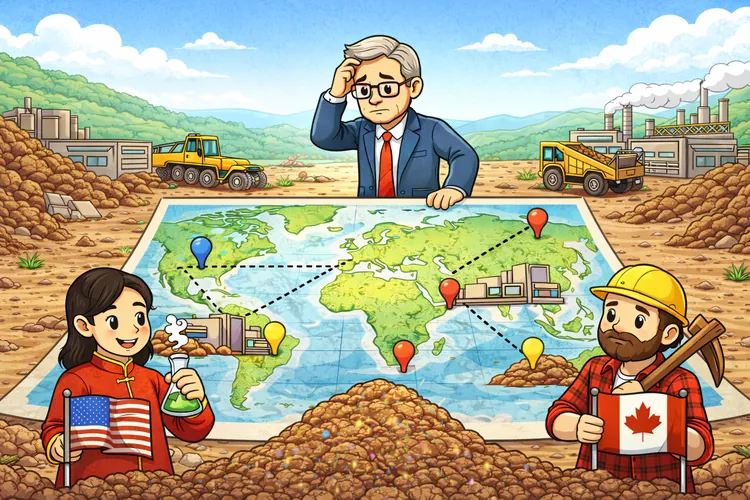
If rare earth metals are the hidden backbone of modern technology,
then the next question is simple:
Who controls the backbone?
Mining is not the same as control
Rare earth supply chains have three stages:
- Mining
- Processing & refining
- Manufacturing
Most people think mining is the key.
In reality, control sits in processing.
You can mine in many places.
You can refine in very few.
The geography of rare earths
Deposits exist across:
- China
- United States
- Canada
- Australia
- Africa, South America, Central Asia
Geology suggests diversity.
Economics created concentration.
How China became the hub
China invested in:
- processing capacity,
- refining infrastructure,
- manufacturing.
Meanwhile, many Western countries:
- tightened environmental rules,
- shut down facilities,
- outsourced production.
Today, China dominates the middle of the supply chain.
Why North America feels exposed
The issue is not resources.
It’s processing capacity.
Without it:
- supply chains stretch,
- risks increase,
- dependence grows.
Rare earths are critical for:
- defense systems,
- renewable energy,
- electric vehicles,
- electronics.
Why rebuilding is difficult
Processing is:
- chemically complex,
- environmentally sensitive,
- slow to develop.
Projects take years.
And often face public resistance.
This creates a paradox:
Clean energy depends on “dirty” processes.
Not a monopoly — a fragile system
Rare earths are not controlled by a single actor.
Instead:
- capacity is concentrated,
- supply chains are fragile,
- rebuilding takes time.
The global response includes:
- diversification,
- new partnerships,
- reshoring efforts.
Final thought
Control in modern economics doesn’t come from resources alone.
It comes from the middle of the supply chain.
The part most people never see.