
What Is Money, Really? A Human Story Behind the Numbers
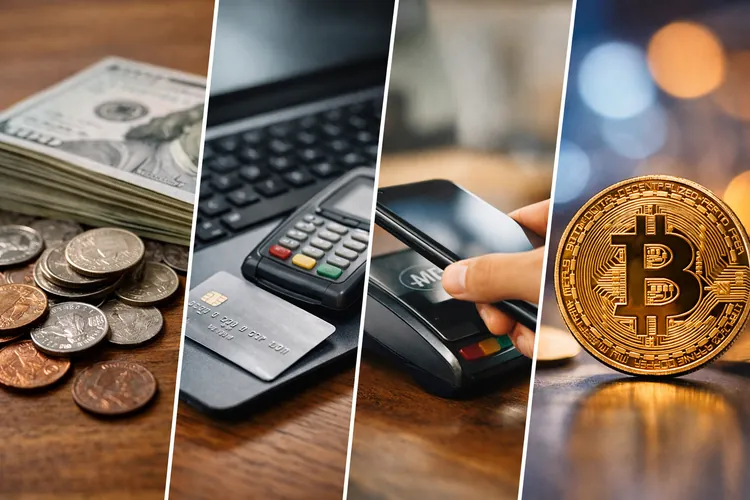
Money is everywhere. It’s in our pockets, on our screens, in our worries, and in our dreams. We chase it, save it, spend it, invest it, argue about it, and occasionally pretend not to care about it while checking our banking app three times before lunch.
But pause for a moment and ask a deceptively simple question: what is money, really?
Most people would say money is cash, a bank balance, or a paycheck. Economists usually describe it as a medium of exchange, a unit of account, and a store of value. Technically correct. Also slightly lifeless.
Because money is not just an economic tool. It is a social agreement, a psychological force, a political instrument, and increasingly, a digital belief system. It shapes how societies organize themselves and how individuals measure security, success, and even self-worth.
And perhaps the strangest part is this: most modern money is almost entirely invisible.
We work for numbers.
We save numbers.
We borrow numbers.
We panic about numbers.
And sometimes entire governments hold emergency meetings because certain numbers moved in the wrong direction by 0.25%.
Civilization, it turns out, is remarkably emotional about spreadsheets.
From Barter to Shared Imagination
Long before dollars, euros, or cryptocurrencies existed, people exchanged goods directly. Grain for tools. Fish for cloth.
This worked reasonably well in small communities. Until reality became inconvenient.
The fisherman might not need grain.
The farmer might not want fish today.
The blacksmith might decide that repairing your shovel is somehow not worth two chickens and half a goat.
Barter had a coordination problem. Money solved it.
But here is the important part: money only works because people collectively agree that it works.
A dollar bill is not valuable because of the paper itself. If it were, children with crayons would be financial institutions. Money has power because society accepts the story behind it.
That story is built on trust:
- trust that others will accept the currency tomorrow
- trust that governments will not destroy its value too quickly
- trust that banks will honor balances
- trust that numbers on screens can still buy groceries next week
In that sense, money may be humanity’s most successful collective fiction.
Not fiction in the sense of “fake,” but fiction in the sense of a shared narrative powerful enough to coordinate millions of strangers.
People who will never meet each other wake up every morning and cooperate because they believe in the same symbols.
That is extraordinary.
The Philosophy of Money: Why Society Needs It
Modern societies often treat money as if it were the center of life itself. In reality, money is more like the operating system underneath civilization.
Without money, modern economies would become painfully slow and fragmented. Money allows specialization. It allows strangers to cooperate without personal trust. A software engineer in Toronto can create code used by a logistics company in Texas that coordinates shipments from factories in Vietnam — all because money creates a universal language of exchange.
Money simplifies complexity.
But it also changes human behavior in subtle ways.
Once something can be measured financially, societies begin reorganizing themselves around that measurement. Time becomes billable. Attention becomes monetized. Creativity becomes “content.” Friendship occasionally becomes networking.
Even relaxation now sometimes arrives with a subscription plan.
Modern capitalism did not simply create wealth. It transformed the way humans perceive value itself.
And this creates a strange philosophical tension.
On one hand, money increases freedom. A person with financial stability has more choices, more mobility, and often more independence.
On the other hand, societies can become so focused on financial metrics that human meaning starts shrinking into economic performance.
A person earning $300,000 a year may still feel unsuccessful because someone on social media appears richer. Meanwhile, a retired couple with modest savings and a peaceful home may quietly possess something far more valuable: enough.
Modern economies are very efficient at producing desire.
They are slightly less efficient at defining satisfaction.
Why Money Feels So Personal
If money were merely a tool, people would discuss it calmly.
They do not.
Money conversations can trigger anxiety, shame, pride, envy, guilt, insecurity, and sometimes full family arguments during holidays.
Because money is never just about money.
For many Americans and Canadians, money represents:
- security
- freedom
- independence
- achievement
- status
- identity
- control over uncertainty
In modern society, income often becomes a shorthand for competence. Wealth becomes social proof.
A large house signals success.
A luxury watch signals status.
A business-class seat signals importance.
Or at least that is the theory.
In practice, many financially stressed people are sitting in expensive SUVs while drinking coffee purchased on credit and listening to podcasts about “financial freedom.”
Modern consumer culture occasionally resembles a competition where everyone tries to look relaxed while secretly calculating monthly payments.
And yet the emotional role of money is understandable.
Money affects survival.
It affects healthcare.
It affects education.
It affects where people live, how they age, and how much stress they carry every day.
It is difficult to remain philosophically detached about something tied so closely to human security.
Digital Money and the Era of Abstraction
Money today is more abstract than at any other point in history.
Most money no longer exists physically. It exists as entries inside databases.
We tap cards.
We scan phones.
We send invisible numbers across continents in seconds.
This is incredibly efficient. It is also psychologically strange.
For most of history, spending money meant physically parting with something tangible: coins, cash, gold, silver.
Now spending often feels like pressing a glowing rectangle and receiving a dopamine notification.
This changes behavior.
Research consistently shows that people tend to spend more easily when transactions become frictionless. Physical cash creates emotional resistance. Digital payments reduce it.
In other words, modern technology has made money more convenient partly by making it feel less real.
And then came cryptocurrencies.
Cryptocurrencies forced society to revisit an uncomfortable question: if money depends on trust, who exactly should we trust?
Governments?
Central banks?
Private corporations?
Algorithms?
Online communities with laser-eye profile pictures?
Supporters of crypto argue that decentralized systems reduce dependence on governments and financial institutions. Critics argue that replacing traditional institutions with speculative digital enthusiasm may not automatically create stability.
Both sides occasionally sound like philosophy students arguing inside a casino.
Still, cryptocurrencies revealed something important: money is evolving again.
Just as societies once transitioned from metal coins to paper currency, and from paper to electronic banking, we are now entering another experiment in how value is stored and transferred.
No one fully knows where it ends.
Which is probably why so many people speak about digital finance with either revolutionary excitement or mild existential panic.
The Strange Relationship Between Money and Time
One of the most overlooked truths about money is that it often represents stored human time.
A paycheck is not just income.
It is converted life hours.
When someone spends $100, they are often spending several hours of work, stress, effort, and attention transformed into currency.
Seen this way, money becomes deeply philosophical.
A society’s financial system is essentially a giant mechanism for translating human time into economic value.
And that creates difficult questions.
Why are some forms of labor rewarded dramatically more than others?
Why can entertainment sometimes generate more wealth than teaching?
Why does speculative trading occasionally produce greater income than socially necessary work?
Markets reward scarcity, leverage, attention, and demand.
They do not necessarily reward moral importance.
This can feel uncomfortable, but it explains much about modern economies.
A viral app may create more wealth than years of socially valuable community work.
A celebrity can earn more from one endorsement than a nurse earns in years.
Economically rational? Sometimes.
Emotionally satisfying? Less so.
Money as a Reflection of Society
Money also reveals what societies prioritize.
Where money flows, power follows.
If billions flow toward entertainment, advertising, and speculative assets, those sectors expand. If money flows toward infrastructure, education, or scientific research, societies develop differently.
Money is not merely an individual concern. It is a voting mechanism embedded inside the economy.
Every purchase, investment, subsidy, tax policy, or budget decision quietly signals collective priorities.
This is why debates about money are never purely technical. They are moral debates disguised as financial debates.
How much inequality is acceptable?
What deserves public support?
Should housing primarily be shelter or investment?
Should healthcare function like a market commodity?
Should universities operate like businesses?
Underneath all these questions sits the same issue: what should money control — and what should remain outside its reach?
Modern societies still do not have a perfect answer.
So, What Is Money?
At its core, money is:
- a tool for cooperation
- a storage system for human effort and time
- a psychological force
- a social agreement built on trust
- a reflection of collective priorities
Money itself is neither good nor evil. It amplifies what already exists.
In thoughtful hands, it builds businesses, supports families, funds innovation, and creates opportunity. In careless hands, it magnifies greed, anxiety, vanity, and short-term thinking.
Perhaps the most important question is not:
“How much money do I have?”
But rather:
“What role do I want money to play in my life?”
Because modern society often encourages people to treat money as a scoreboard for human worth.
It is not.
Money is powerful.
Necessary.
Influential.
Sometimes inspiring.
Occasionally absurd.
But in the end, it remains a tool created by humans — and tools are supposed to serve their owners, not quietly become their masters.
Which is fortunate.
Because if money truly understood how emotionally humans behave around it, it might start charging us therapy fees.