
What Energy Scarcity Really Means in the 21st Century
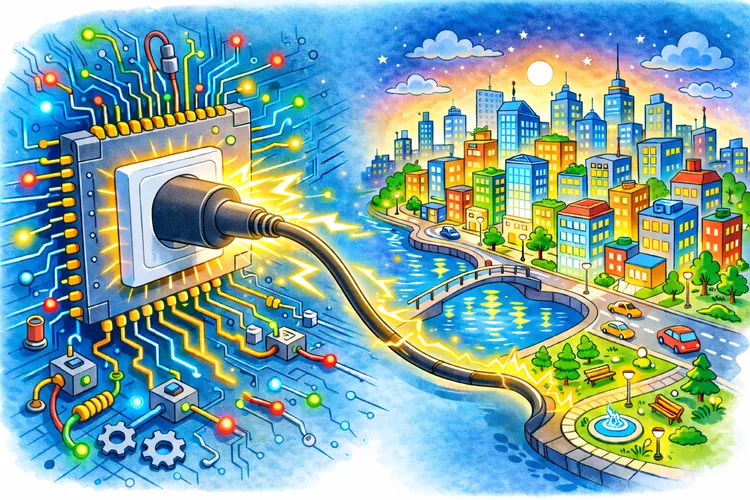
For most of modern economic history, energy scarcity was easy to understand.
There simply wasn’t enough supply.
Energy was expensive to extract, and price spikes were a clear signal that the world was running into limits.
Oil embodied that logic perfectly.
When oil prices rose, the message was obvious:
energy is scarce, growth will slow, and inflation will rise.
But in the 21st century, that definition of scarcity is beginning to break down.
Scarcity Used to Mean “Not Enough Fuel”
In the 20th century, energy scarcity was mostly about physical resources:
- oil fields
- coal reserves
- gas pipelines
- geopolitical access
Prices reflected geology and politics.
High prices meant shortage.
Low prices meant abundance.
This framework worked well for decades — until the energy system itself began to change.
Demand Has Changed Faster Than Intuition
One number helps explain the shift.
Global electricity consumption has roughly doubled between 2000 and 2025.
Not over a century.
Not over multiple generations.
In about twenty-five years.
This growth is driven by:
- digitalization
- data centers
- electrified transport
- urbanization
- rising living standards
Electricity is becoming the core energy carrier of the global economy.
Scarcity Looks Different Today
The world is not running out of energy sources.
We have:
- enormous renewable potential
- existing nuclear capacity
- and possibly fusion in the future
What we increasingly lack is something else:
usable electricity at the right time, in the right place, with the right reliability.
Modern energy scarcity is therefore less about fuel and more about systems.
The New Constraints
The bottlenecks in today’s energy system are different:
- infrastructure: grids, transmission, interconnections
- flexibility: storage, balancing capacity
- reliability: stable supply during peaks and shocks
- coordination: markets, regulation, planning
Solar panels can be installed quickly.
Electric grids cannot.
This creates a paradox: energy may be abundant in theory, but scarce in practice.
Why Prices No Longer Tell the Whole Story
In the past, oil prices acted as a universal signal of energy scarcity.
Today the system is more fragmented.
Scarcity appears as:
- regional electricity price spikes
- grid congestion
- capacity shortages
- regulatory bottlenecks
- volatile markets rather than sustained shortages
There is no longer one price that explains the whole energy system.
The Paradox of the Transition
The energy transition is designed to reduce scarcity.
In the long run, it probably will.
But in the short and medium term it creates new tensions:
- rapidly rising electricity demand
- variable renewable generation
- complex infrastructure systems
- uneven investment in grids and storage
In other words:
we are moving toward abundance — through a period of tighter constraints.
A New Definition of Scarcity
In the 21st century, energy scarcity does not mean:
“The world is running out of energy.”
Instead it means:
“The world is struggling to build electricity systems fast enough to meet demand.”
Scarcity is no longer underground.
It is systemic.
The Final Takeaway
Energy is becoming cleaner, more diverse, and more technologically advanced.
But it is not becoming simpler.
The central challenge of the coming decades will not be finding energy.
It will be organizing it.
And in that world, the most valuable assets may not be fuels or generators — but systems that make abundance reliable.