
Thermal Power Plants: The Backbone That Still Holds the System Together
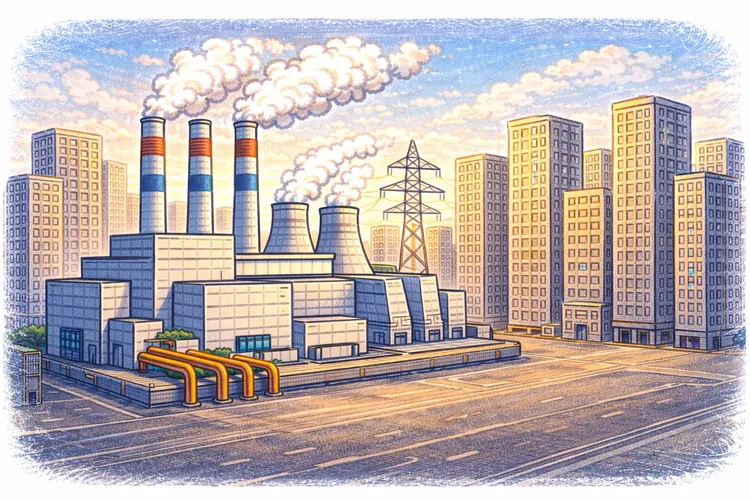
When people talk about the energy transition, thermal power plants often appear as yesterday’s technology.
Coal, gas, oil — legacy fuels, old infrastructure, something to be phased out.
And yet, if we look at how electricity is actually produced today, thermal power plants remain one of the central pillars of the global energy system.
How Dominant Were Thermal Plants at the Start of the Century?
At the beginning of the 2000s, global electricity generation was overwhelmingly thermal.
Around two-thirds of the world’s electricity (≈64–66%) came from fossil-fuel power plants:
- coal as the largest contributor
- gas as a fast-growing source
- oil playing a smaller but still visible role
Thermal plants defined how grids were built, how electricity markets were structured, and how prices behaved.
They were:
- dispatchable
- scalable
- relatively cheap to operate once built
Where Are We in 2025?
By 2025, the picture has changed — but less dramatically than headlines sometimes suggest.
Thermal power plants still account for roughly ~60% of global electricity generation.
What has changed is the composition:
- coal has declined in many advanced economies
- natural gas has expanded
- oil-fired power has become marginal globally
Oil generation now mainly appears in:
- isolated systems
- peak demand situations
- regions with limited alternatives
Thermal power has shrunk — but it has not disappeared.
Why Gas Matters More Than Oil
Among thermal technologies, natural gas plays a special role.
Gas-fired plants are:
- faster to ramp up and down
- ideal for balancing wind and solar
- cleaner than coal in CO₂ terms
- flexible enough for modern grids
For this reason, gas is often called a bridge fuel during the energy transition.
Oil-fired power, by contrast, has largely lost its economic role except in niche cases.
The Real Economic Value of Thermal Plants
Today, thermal power’s main contribution is not volume — it is flexibility.
As renewable generation grows, electricity systems face:
- intermittency
- variability
- sharper demand peaks
Thermal plants — especially gas — provide:
- backup capacity
- grid stability
- rapid response when renewable output drops
In economic terms, they increasingly function as insurance for the power system.
The Contradiction of the Energy Transition
Modern societies want:
- fewer fossil fuels
- lower emissions
- cleaner electricity
But energy systems still rely on thermal plants to:
- keep lights on
- stabilize grids
- manage system risk
As a result, thermal power is becoming:
- less dominant in total electricity generation
- but more critical in system reliability.
The Takeaway
Thermal power plants are no longer the future of electricity.
But they are not the past either.
They remain the structural glue holding modern energy systems together — quietly, controversially, and indispensably.
And understanding their role helps explain why the energy transition is far more complex than it looks.