
The Economy Needs People — But Where Do They Come From?
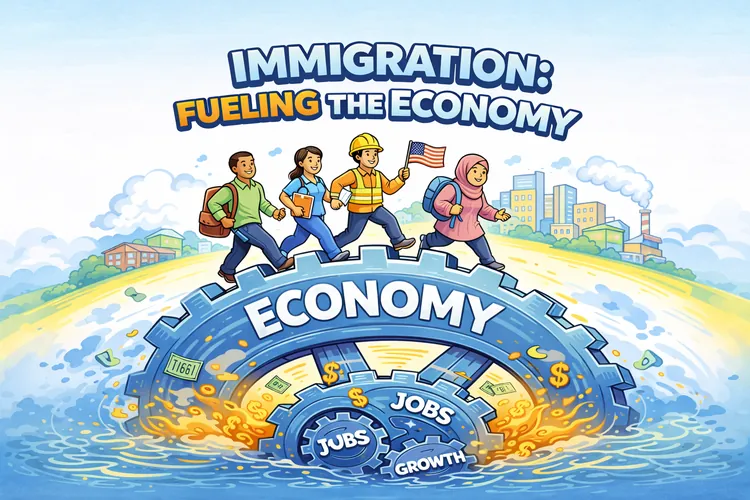
Imagine an economy that needs workers…
But doesn’t have enough people.
Factories are ready.
Hospitals need staff.
Construction projects are waiting.
But there simply aren’t enough hands.
So what happens next?
A Simple Reality
When birth rates fall and populations age, countries face a choice:
Accept slower growth…
Or bring in people from somewhere else.
That “somewhere else” is immigration.
The Numbers Behind the Debate
Let’s look at North America.
In the United States:
- population growth in recent years has been heavily supported by immigration
- without it, workforce growth would be close to zero
In Canada:
- immigration is even more central
- in 2023, the population grew by over 1.2 million people
- about 98% of that growth came from international migration
That’s not a side factor.
That’s the main driver.
Who Fills the Gaps
Immigrants don’t just increase population numbers.
They fill specific economic needs.
- healthcare workers
- construction labor
- tech specialists
- service industry employees
In many sectors, businesses rely on immigrants to keep operating.
Without them, shortages become visible very quickly.
The Economic Upside
More people means:
- more workers
- more taxpayers
- more consumers
That supports:
- GDP growth
- housing demand
- business expansion
In simple terms:
Immigration can act like fuel for the economy.
That’s one reason countries like Canada actively compete for skilled migrants.
But It’s Not That Simple
If immigration were purely economic, there would be little debate.
But it’s not.
Immigration also raises questions about:
- housing affordability
- infrastructure capacity
- wages in certain sectors
- cultural and political identity
In cities like Toronto or Vancouver, rapid population growth has collided with limited housing supply — pushing prices higher.
So the same force that boosts growth can also create pressure.
The Timing Problem
Here’s a subtle issue:
Immigration helps — but it has to match the economy.
Too little:
- labor shortages persist
Too much, too fast:
- housing, schools, and healthcare systems get strained
The challenge is not just how many people, but how quickly they arrive and how well they integrate.
A Long-Term Bet
There’s also a strategic layer.
Many developed countries are competing for the same global talent.
Engineers, doctors, skilled workers — they have choices.
Countries that attract them gain an advantage.
Countries that don’t may face:
- slower innovation
- weaker growth
- deeper demographic decline
The Quiet Trade-Off
Here’s the core tension:
Economies need people.
But societies need balance.
Too little migration — and growth slows.
Too much — and systems feel pressure.
There is no perfect number.
Only trade-offs.
A Thought to Leave With
If populations aren’t growing fast enough…
And economies still need workers…
Then the question becomes:
Is immigration a temporary fix — or the new foundation of growth?