
The Dollar Paradox: When Strength Becomes a Problem
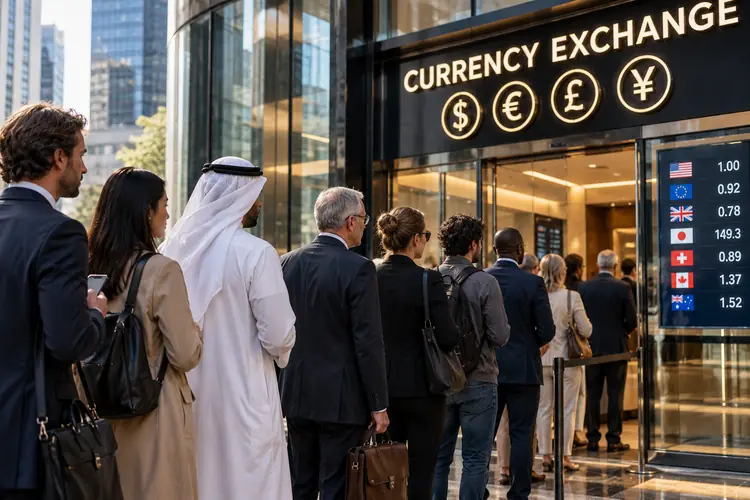
The world's most powerful currency is getting stronger. That sounds like good news for America. But economics has a habit of making good news surprisingly expensive.
When Winning Becomes Complicated
Imagine you're running a country, and its currency is becoming more valuable.
Foreign investors want it. International markets trust it. Your citizens can buy imported goods more cheaply.
Sounds like success.
Now imagine your exporters are losing customers, your multinational corporations are reporting disappointing profits, and countries that borrowed in your currency are struggling to repay their debts.
Still sounds like success?
Welcome to the strange economics of the US dollar.
In our previous article “The Dollar Has a Score. But What Does It Measure?” we explored the US Dollar Index, or DXY, which measures the dollar against six major currencies. Now comes the more interesting question.
What happens when that index rises? The obvious answer is that the dollar becomes stronger. The less obvious answer is that strength can become a problem.
And not just for America.
The Dollar Is Getting Stronger. Again.
The dollar has had an interesting couple of years.
In 2025, it suffered one of its sharpest annual declines in two decades. Investors worried about American economic policies, interest rates, and the dollar's longer-term prospects.
But 2026 has brought a reversal. By mid-October, DXY had climbed above 102, compared with levels below 97 earlier in the year.
Higher US interest rates and attractive Treasury yields helped bring investors back. Geopolitical uncertainty added another reason to hold dollars.
Then, in the second week of October, the rally lost some momentum. Concerns about debt-financed AI investment and changing expectations for Federal Reserve policy pushed DXY back toward 102. On October 16, the index closed around 101.8, still substantially above its January lows.
These movements may look modest. After all, we're talking about a few percentage points.
But in a global financial system moving trillions of dollars, a few percentage points can redistribute enormous amounts of wealth.
And that's where the story gets interesting.
A Strong Dollar Has a Price
Let's start with an American tourist visiting Europe.
If the dollar strengthens against the euro, that tourist gets more euros for the same number of dollars. Hotels, restaurants, and shopping become cheaper. For the tourist, a strong dollar is wonderful.
Now consider an American company selling machinery to European customers.
Suppose its product costs $100,000. If one dollar buys €0.90, the European customer pays €90,000. But if the dollar strengthens and buys €1.00, the same machine suddenly costs €100,000.
Nothing about the machine has changed. The factory hasn't become less efficient. Workers haven't demanded higher wages. The product hasn't become more sophisticated. Yet the European customer now faces a price increase of more than 11%.
That's the first problem with a strong dollar.
It can make American exports less competitive.
The second problem affects multinational corporations.
Imagine an American company earns €1 billion in Europe. At an exchange rate of $1.10 per euro, that's $1.1 billion in reported revenue. At $1.00 per euro, it's only $1 billion.
The company hasn't sold fewer products. Its European customers haven't disappeared. But its dollar-denominated revenue has fallen by $100 million.
Currency movements can change corporate results without changing the underlying business. Of course, cheaper imports benefit American consumers and companies using foreign components. And a strong dollar can help contain inflation by reducing the dollar cost of imported goods.
The result?
America wins and loses simultaneously. It depends on which part of America you're looking at.
The Rest of the World Pays Attention
Now imagine you're the finance minister of a developing country.
Your government borrowed $10 billion from international investors. At the time, one dollar cost 50 units of your national currency. Your debt was worth 500 billion local currency units.
Then the dollar strengthens. One dollar now costs 60 units. Your debt hasn't changed in dollars. You still owe $10 billion. But measured in your own currency, the obligation has grown to 600 billion. That's a 20% increase.
No new schools were built. No hospitals opened. No additional infrastructure appeared.
Your country simply became poorer relative to its dollar obligations.
This is one reason dollar strength can create serious problems for emerging economies.
And the effects don't stop with debt.
Oil, many metals, agricultural commodities, and countless international contracts are priced in dollars. When local currencies weaken against the dollar, imported goods can become more expensive, even if their dollar prices remain unchanged.
Central banks may respond by raising interest rates to defend their currencies or control inflation. That makes borrowing more expensive for local businesses and households. Economic growth can slow.
In September 2026, stronger US yields and a rising dollar were already putting pressure on emerging-market debt.
Of course, countries aren't equally vulnerable. Those with large foreign-exchange reserves, limited dollar debt, and strong export revenues are better equipped to manage the pressure.
But the underlying problem remains.
A currency controlled by one country's central bank plays a central role in the financial lives of almost everyone else.
And those other countries don't get a vote at the Federal Reserve.
The Strange Power of a Weak Dollar
So perhaps America should prefer a weaker dollar?
Not so fast.
A moderately weaker dollar can make American exports more competitive. It can increase the dollar value of foreign earnings. It may also relieve pressure on emerging economies, supporting global demand for American goods and services.
But weakness has costs. Imported products become more expensive. Inflationary pressure can increase. And if the dollar falls because investors are losing confidence in American economic management, the consequences could be much more serious.
The reason behind a currency movement matters as much as the movement itself.
A dollar that weakens because the global economy is recovering tells one story. A dollar that weakens because investors fear American financial instability tells another.
The same number on the DXY scoreboard can describe two completely different economic realities.
There's another distinction worth remembering.
A falling dollar index doesn't mean the dollar is losing its role as the world's dominant international currency.
Exchange rates measure relative prices.
Global currency dominance depends on something much deeper: financial markets, institutions, international trade, liquidity, and trust.
The dollar can decline against the euro while remaining indispensable to global banking and finance.
In fact, that has happened many times.
The Currency Everyone Needs
Here's the real paradox.
The United States benefits enormously from issuing the world's leading international currency. It gives American financial markets exceptional depth, creates global demand for dollar assets, and makes it easier for the US government to borrow.
But the dollar's international role also creates obligations and tensions.
The Federal Reserve sets monetary policy primarily for the American economy.
Yet its decisions influence borrowing costs, capital flows, and exchange rates across the planet. When US interest rates rise, investors may move money toward dollar assets. The dollar strengthens. Other currencies weaken.
Some countries face higher inflation, more expensive debt, and slower growth.
And if those problems become severe enough, they can reduce demand for American exports and threaten global financial stability.
America's monetary strength can eventually create economic problems for America itself.
That's not a contradiction. It's how an interconnected financial system works.
So what should we hope for when watching the Dollar Index? A rising number? A falling one?
Perhaps neither.
A stable, trusted dollar, supported by a healthy American economy and a functioning global financial system, may be more valuable than spectacular currency appreciation. Because a currency isn't a sports team.
Its purpose isn't to defeat every competitor. It's to make economic activity possible.
The world's most powerful currency has a strange problem: when it becomes too strong, everyone else may suffer. And eventually, America may pay the price too.
That's the dollar paradox.
And it's why the next movement in DXY matters far beyond Wall Street.
Advertisement
728 x 90