
Rare Earth Metals: The Invisible Backbone of the Modern World
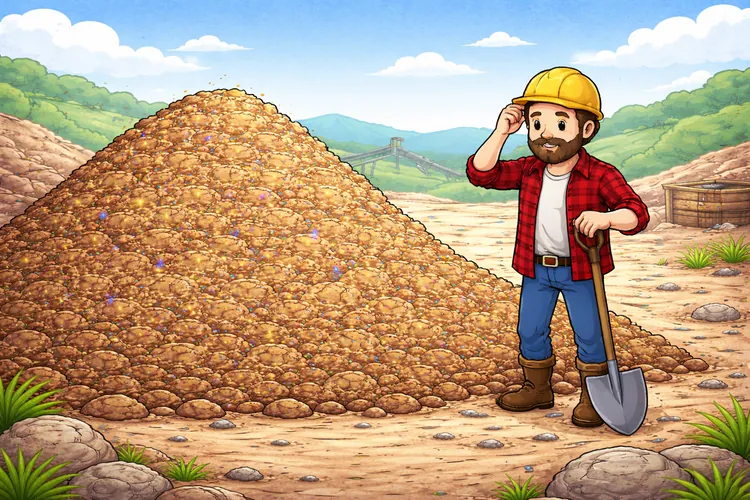
Most people hear the phrase rare earth metals and imagine something exotic, scarce, and maybe locked away in secret government vaults.
The reality is both less dramatic — and far more important.
Rare earth metals don’t make headlines because they’re shiny or expensive like gold. They matter because modern life, as we know it, quietly depends on them.
Your smartphone.
Your electric car.
Wind turbines.
Advanced medical scanners.
Military guidance systems.
All of them rely on materials most people have never heard of — and almost no one can name.
What Are Rare Earth Metals — and Why Are They “Rare”?
Despite the name, rare earth elements (REEs) aren’t actually that rare in the Earth’s crust. Some are more abundant than copper or lead.
What is rare is finding them:
- in high enough concentrations
- easy enough to extract
- cheap enough to process safely
There are 17 rare earth elements, mostly from the lanthanide group on the periodic table.
Instead of being found in neat underground veins, they’re usually scattered in low concentrations across large rock formations.
Extracting them requires complex chemical processes, specialized infrastructure, and — crucially — tolerance for environmental and regulatory challenges.
In other words, the geology isn’t the main problem.
The economics and politics are.
Why the Sudden Global Obsession?
For decades, rare earth metals were a niche concern for engineers and defense planners.
That changed for three reasons.
1. The Green Energy Transition
Electric vehicles, wind turbines, solar panels, and energy storage systems all depend on rare earths — especially powerful permanent magnets made from neodymium and dysprosium.
A single large wind turbine can contain hundreds of kilograms of rare earth materials.
2. The Tech Arms Race
Smartphones, data centers, AI hardware, and advanced chips rely on rare earths for miniaturization, heat resistance, and performance stability.
As digital infrastructure expands, so does demand.
3. Supply Chain Vulnerability
The world discovered something uncomfortable: critical materials are not evenly distributed — and production is even more concentrated.
This is where economics stops being abstract and starts feeling political.
Rare Earths: Small Metals, Big Leverage
Unlike oil or gas, rare earth metals are not traded on transparent global exchanges.
Prices are opaque.
Contracts are long-term.
Supply disruptions don’t cause headlines — they cause quiet panic in boardrooms and defense departments.
When a country controls refining capacity, it controls who gets access, at what price, and under what conditions.
That makes rare earths not just an industrial input, but a strategic asset.
Why You’ve Probably Never Thought About Them
Rare earths are the ultimate background material.
They don’t dominate the cost of a product, but without them the product simply doesn’t work.
No rare earth magnets?
Your electric motor becomes heavier, weaker, and less efficient.
No rare earth phosphors?
High-definition screens lose brightness and color accuracy.
No rare earth alloys?
Jet engines and military hardware lose heat resistance and reliability.
They don’t steal the spotlight — but they hold the system together.
A Quiet Economic Shift
We’re entering a phase where economic power isn’t just about who sells the most finished products, but who controls the inputs that make modern technology possible.
Rare earth metals sit right at that intersection:
- geology meets geopolitics
- green energy meets national security
- free markets meet strategic planning
And this is only the beginning of the story.
In the next article, we’ll look at where rare earth metals actually come from, why production is so geographically concentrated, and what that means for the US, Canada, and the global economy.