
National Currencies: What Actually Stands Behind Them?
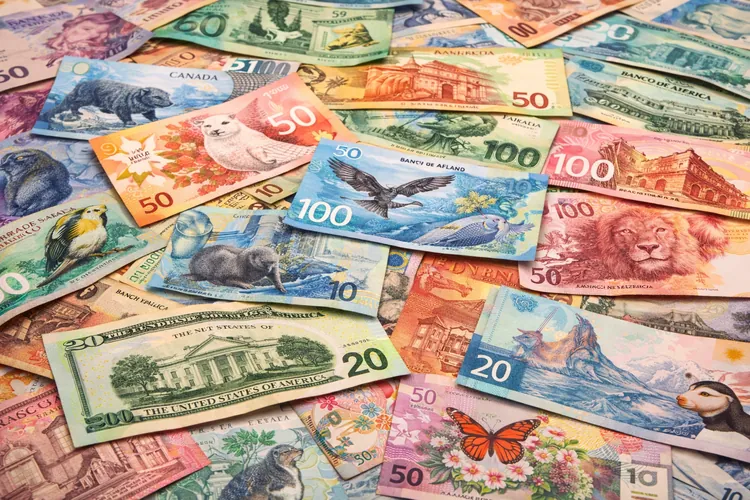
We use national currencies every day—U.S. dollars, Canadian dollars, euros, pesos—yet few of us stop to ask a simple question:
What actually gives these pieces of paper and digital numbers their value?
The honest answer is both simple and slightly uncomfortable. Modern currencies are backed not by gold, silver, or oil—but mostly by trust.
And trust, as history repeatedly demonstrates, is one of the most powerful and fragile economic inventions humanity has ever created.
From Gold to Confidence
For centuries money was tied to something physical. Under the gold standard, a dollar was essentially a receipt for a specific amount of gold stored somewhere in a vault. Governments could not endlessly print money because, at least in theory, every banknote represented real metal.
People liked this idea because gold felt permanent. Gold does not disappear because of elections. It does not panic during recessions. It does not post emotional reactions on social media.
The system created discipline. But it also created limits.
As economies grew larger and more complicated, governments needed flexibility. Wars, industrial expansion, financial crises, and international trade required more money than gold reserves could comfortably support. Economies occasionally behaved like modern highways forced to operate with horse-carriage traffic rules.
So gradually the world moved away from gold-backed currencies.
The decisive moment came in 1971, when the United States officially ended the convertibility of the U.S. dollar into gold. The famous Bretton Woods system effectively collapsed, and the modern era of fiat currencies fully began.
That word—fiat—sounds dramatic, but it simply means money that has value because governments declare it legal tender and society agrees to accept it.
In practical terms, today a U.S. or Canadian dollar is backed by:
- the size and productivity of the economy,
- the government’s ability to collect taxes,
- the credibility of the central bank,
- political stability,
- and most importantly, public confidence.
Which sounds abstract until you realize almost the entire modern financial system depends on this invisible psychological agreement continuing tomorrow morning.
The Strange Magic of Fiat Money
This creates one of the great ironies of economics.
A $100 bill costs only a tiny amount to physically produce. Yet people exchange real labor, real food, real houses, and sometimes entire careers for it.
Why? Because everyone assumes everyone else will continue believing in it.
Money is, in many ways, a large-scale collective belief system with better graphic design.
That may sound cynical, but it is also incredibly efficient. Fiat currencies allow economies to grow far faster than rigid gold systems ever could. Central banks can react to crises, support financial systems, and expand liquidity when necessary.
Of course, the same flexibility can become dangerous. When governments abuse that trust through excessive money creation, inflation appears. In extreme cases, currencies can collapse entirely.
History provides plenty of examples:
- Weimar Germany,
- Zimbabwe,
- Venezuela,
- Argentina during repeated crises.
In these situations people do something fascinating: they stop trusting the national currency and begin trusting almost anything else. U.S. dollars. Gold. Real estate. Cryptocurrencies. Even cigarettes in certain historical situations.
When confidence disappears, the paper itself suddenly reveals what it always physically was: paper.
Currencies Tied to Commodities
Not every country has relied purely on institutional trust. Some governments have tried linking currencies to real commodities.
Gold remains the classic example. Even today central banks still hold enormous gold reserves despite modern currencies no longer being formally tied to gold.
Why? Because even central bankers occasionally seem to want an emotional support metal.
Oil-backed currencies have also been attempted. Venezuela’s Petro became one of the most famous modern experiments—a digital currency supposedly backed by oil reserves. The logic sounded attractive: “If oil is valuable, shouldn’t money backed by oil also be valuable?”
Unfortunately, reality turned out to be less cooperative.
The Petro struggled because commodities alone cannot create trust. Institutions matter. Transparency matters. Political stability matters even more.
A currency backed by oil but managed poorly may still lose credibility very quickly.
This is one of the most misunderstood ideas in economics: resources help countries, but institutions help currencies.
Where Currencies Meet: The Forex Market
National currencies do not exist in isolation. They constantly compete, interact, rise, and fall against one another. This happens on the foreign exchange market—commonly called Forex or FX.
Forex is essentially the global marketplace where currencies are traded. It is the largest financial market in the world, with daily trading volumes measured in trillions of dollars.
And unlike stock markets, Forex barely sleeps. While New York closes, Tokyo opens. Then London. Then Toronto. Then Singapore. Then back again.
Somewhere on Earth, someone is always trading currencies.
Participants include:
- central banks,
- commercial banks,
- hedge funds,
- multinational corporations,
- governments,
- tourists,
- importers,
- exporters,
- and increasingly ordinary retail investors.
Even buying coffee abroad technically makes you part of the global currency market.
How Exchange Rates Actually Form
People often imagine exchange rates are decided by governments in mysterious rooms filled with economists and serious-looking charts.
In reality, most major exchange rates move continuously through supply and demand.
If global investors want more U.S. dollars, the dollar strengthens. If confidence weakens, demand falls and the currency may decline.
But what influences that demand?
Several major forces interact constantly.
Interest Rates
Higher interest rates often attract foreign capital because investors can earn better returns holding assets denominated in that currency.
This is one reason why Federal Reserve decisions matter globally—not just inside the United States.
A single speech from the Fed Chair can move currencies worldwide faster than most people can finish their morning coffee.
Inflation
Currencies with persistently high inflation usually weaken over time because purchasing power erodes.
People may tolerate moderate inflation.
They do not enjoy watching savings quietly evaporate.
Economic Growth
Strong economies generally attract investment, increasing demand for their currency. Countries perceived as innovative, productive, and stable tend to maintain stronger currencies over long periods.
Political Stability
Markets dislike uncertainty. Political chaos, corruption, sanctions, or institutional instability can weaken currencies surprisingly quickly.
Investors may tolerate many things. But uncertainty about uncertainty tends to make them nervous.
Trade Balances
Countries exporting more goods than they import often generate stronger demand for their currency because foreign buyers need that currency to purchase products.
This partly explains why energy exports, manufacturing strength, and commodity cycles can strongly influence currencies like the Canadian dollar.
Why the U.S. Dollar Matters So Much
The U.S. dollar occupies a unique position in the global system.
It is not just America’s currency. It is effectively the world’s default financial language. International trade, energy markets, global debt markets, and central bank reserves are still heavily dollar-based. Oil prices, for example, are usually quoted in dollars regardless of where the oil is produced.
This creates enormous global demand for dollars.
Ironically, people who strongly dislike American policy often still prefer holding U.S. dollars during crises.
Because in moments of uncertainty, investors tend to ask: “What feels safest?”
And historically, the answer has often been: “Probably the dollar.”
What Is the Dollar Index?
One important measure of dollar strength is the U.S. Dollar Index, often called DXY.
The Dollar Index compares the U.S. dollar to a basket of major foreign currencies, including:
- the euro,
- Japanese yen,
- British pound,
- Canadian dollar,
- Swedish krona,
- and Swiss franc.
When the index rises, it generally means the dollar is strengthening relative to those currencies. When it falls, the dollar is weakening.
But the meaning goes beyond tourism exchange rates.
A strong dollar can:
- reduce import costs for Americans,
- help control inflation,
- attract global investment,
- but also make U.S. exports more expensive abroad.
A weaker dollar can:
- support exporters,
- improve competitiveness,
- but also increase import prices and inflation pressure.
So even movements in the Dollar Index reflect trade-offs rather than simple “good” or “bad” outcomes.
Economics rarely offers free lunches. Mostly invoices with complicated footnotes.
The Canadian Dollar and Commodity Currencies
Canada offers an especially interesting currency case.
The Canadian dollar is often influenced by commodity prices—especially oil and natural resources. When commodity prices rise, the Canadian dollar frequently strengthens because global demand for Canadian exports increases.
This is why Canadians sometimes joke that their currency partially lives inside an oil barrel.
Commodity-linked currencies can experience larger swings because commodity markets themselves are volatile.
When oil prices surge: the currency often strengthens. When global demand slows: the currency may weaken.
This creates an unusual national experience where people casually discuss both gasoline prices and exchange rates as if they were weather forecasts. Which, economically speaking, they almost are.
So What Is a National Currency Today?
It is no longer a piece of gold sitting quietly inside a vault. It is a constantly evolving social contract.
A U.S. or Canadian dollar works because millions of people believe it will:
- buy groceries tomorrow,
- pay salaries next month,
- settle debts,
- and hold value long enough to plan a future.
That confidence is reinforced every day through trade, taxes, wages, banking systems, and central bank policy. When trust is strong, currencies become powerful economic tools. When trust weakens, even sophisticated financial systems begin to wobble.
Money, in the end, is not really about paper, metal, or even computers.
It is about belief.
And modern economies may be the largest trust experiment humanity has ever attempted.