
From Games to a Global Industry: How Sport Became Big Business
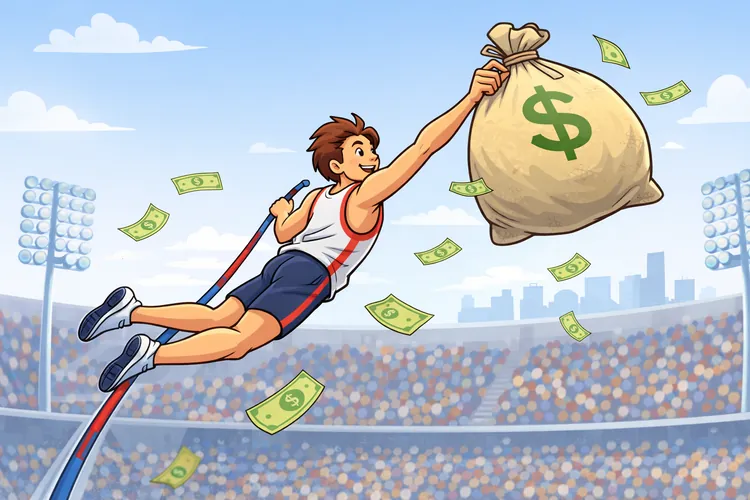
Two hundred years ago, sport barely existed as an industry.
People ran, wrestled, boxed, raced horses — but almost no one made serious money from it. There were no broadcasting rights, no global brands, no sports tourism, no billion-dollar stadiums. Sport was entertainment, tradition, or local competition — not an economic sector.
Today, sport is a global industry worth trillions of dollars.
And most people still underestimate how deeply it is woven into the modern economy.
In many countries, sport is no longer just recreation. It influences urban planning, healthcare, education, tourism, media, technology, fashion, and even politics. Entire cities compete for the right to host tournaments. Governments subsidize stadiums. Corporations spend fortunes to place logos on jerseys for a few seconds of television exposure.
At some point, humanity quietly transformed games into infrastructure.
Sport’s Place in the Global Economy
Estimates vary, but broadly speaking, sport-related activities account for around 2–3% of global GDP. Some broader estimates go even higher when indirect industries are included.
That puts sport on the scale of major global industries — not a niche hobby, but a meaningful pillar of the global economy.
But sport is not one simple sector.
The sports economy is really an ecosystem:
- professional leagues,
- media companies,
- apparel brands,
- construction firms,
- tourism,
- medicine,
- nutrition,
- betting,
- streaming platforms,
- data analytics,
- fitness technology,
- education,
- and increasingly, social media itself.
Modern sport creates jobs far beyond athletes.
A basketball game today involves software engineers, camera crews, architects, physiotherapists, airline staff, security companies, marketing agencies, nutrition experts, and probably someone calculating how many chicken wings fans will buy during halftime.
Civilization became surprisingly efficient at monetizing people chasing balls.
The Core of the Sports Economy
At the center are sports events themselves:
- professional leagues,
- international tournaments,
- world championships,
- mega-events like the Olympics or the FIFA World Cup.
These events generate revenue from:
- ticket sales,
- broadcasting rights,
- sponsorships,
- advertising,
- merchandise,
- licensing,
- and digital subscriptions.
For the largest leagues, broadcasting rights are often the biggest source of income.
That changed everything.
Sport used to depend mainly on local spectators. Television turned local games into national products. The internet transformed them into global products.
Today, someone in Canada can follow English soccer, someone in Texas can watch Formula 1 every weekend, and someone in Tokyo can buy an NBA jersey minutes after a playoff game ends.
In many ways, sport became less about geography and more about attention.
And attention, in modern economics, is extremely expensive.
Infrastructure: Stadiums, Cities, and Prestige
Sport reshaped cities.
Modern stadiums are no longer just places to watch games. They are:
- entertainment districts,
- real estate projects,
- tourism magnets,
- political symbols,
- and tools for urban redevelopment.
A major stadium can trigger:
- new hotels,
- subway expansions,
- restaurants,
- apartment construction,
- retail growth,
- and rising property prices.
At least, that is the optimistic version presented in official presentations with dramatic background music.
The reality is more complicated.
Some stadium projects successfully revitalize neighborhoods. Others become extremely expensive monuments visited mainly by pigeons and disappointed taxpayers.
Economists still debate whether publicly funded stadiums truly generate enough long-term economic value to justify their costs. The answer often depends less on sport itself and more on management, tourism, politics, and timing.
The Expensive Theater of Openings and Closings
Mega-events have evolved into something larger than sport.
Olympic ceremonies and World Cup openings are now global entertainment productions involving:
- thousands of performers,
- advanced lighting systems,
- giant screens,
- drones,
- musicians,
- choreography,
- and enormous security operations.
These ceremonies can cost hundreds of millions of dollars.
Why spend so much money on a few hours of performance?
Because modern mega-events are not only competitions. They are national presentations to the world.
Countries use these ceremonies to display:
- technological sophistication,
- cultural identity,
- political confidence,
- organizational capacity,
- and economic power.
The opening ceremony became a kind of geopolitical theater with fireworks.
Sometimes it works brilliantly. Sometimes the bill arrives long after the applause ends.
Equipment, Clothing, and the Rise of Sports Brands
Sport also created some of the world’s strongest consumer brands.
Sports apparel and equipment evolved from practical tools into lifestyle symbols.
Sneakers are no longer just shoes.
Athletic clothing is no longer just for athletes.
Sportswear became fashion, identity, and social signaling.
Ironically, millions of people now own expensive running shoes primarily used for walking to coffee shops.
But economically, this transformation was enormous.
Global sports brands sell:
- aspiration,
- discipline,
- youth,
- confidence,
- and belonging.
Sport stopped selling performance alone.
It started selling emotional identity.
Professional and Amateur Sport: An Invisible Partnership
One of the most important economic realities of modern sport is the relationship between professional and amateur competition.
Professional sport receives most of the attention and money. But without amateur systems, professional sport eventually collapses.
Children playing in school gyms today become future athletes, coaches, referees, doctors, and fans tomorrow.
The pipeline matters.
Youth leagues, school competitions, college athletics, local clubs, and community tournaments form the foundation of the entire industry.
In North America especially, school and university sports became major institutions themselves. College football and basketball attract huge audiences, sponsorships, and media deals. Scholarships connect athletics with education and social mobility.
But amateur sport is growing beyond youth competition.
One of the most interesting modern trends is the expansion of adult and veteran sports:
- marathon running,
- cycling events,
- amateur hockey leagues,
- masters swimming,
- senior tennis tournaments,
- triathlons,
- community fitness competitions.
Millions of adults now train seriously long after traditional athletic careers end.
Partly this reflects healthcare awareness.
Partly longer life expectancy.
And partly something simpler:
People discovered that competition is more enjoyable when your knees still mostly cooperate.
The economic impact is substantial.
Amateur sport fuels:
- gyms,
- fitness apps,
- sports tourism,
- equipment sales,
- nutrition products,
- coaching services,
- and local event industries.
The line between participant and consumer became increasingly blurred.
Paralympic Sport and Economic Visibility
Paralympic sport also deserves separate attention.
For decades, disabled athletes received far less visibility, funding, and sponsorship than mainstream professional sports. But this has slowly begun to change.
Paralympic competitions now attract:
- global broadcasting,
- corporate sponsorship,
- larger audiences,
- and increasing commercial interest.
More importantly, they changed how many societies think about disability itself.
Paralympic athletes represent not only competition, but capability, adaptation, and technological innovation.
Modern prosthetics, rehabilitation systems, adaptive equipment, and accessibility technologies advanced partly because elite disabled athletes pushed performance boundaries.
In economic terms, Paralympic sport contributes to:
- healthcare innovation,
- inclusive infrastructure,
- medical technology,
- specialized manufacturing,
- and broader workforce participation.
And culturally, Paralympic athletes challenge one of the oldest assumptions in economics:
that productivity belongs only to the physically “perfect.”
Reality turned out to be far more complicated — and far more impressive.
Medicine, Science, and Human Performance
Elite sport accelerated entire scientific fields.
Sports medicine, biomechanics, rehabilitation, nutrition, and data analytics now influence:
- healthcare,
- aging research,
- preventive medicine,
- physical therapy,
- and recovery science.
Athletes became experimental laboratories for understanding the human body.
Sleep optimization, hydration tracking, wearable sensors, injury prevention, and performance monitoring now affect ordinary consumers as well.
Modern people may not realize it, but part of the reason their smartwatch tells them to stand up and breathe calmly is because professional sport spent decades turning physiology into measurable data.
Humanity eventually quantified jogging.
Tourism, Media, and the Attention Economy
Major sporting events move people across borders.
Fans travel.
Teams relocate.
Media crews follow.
Sponsors organize campaigns.
Cities compete for exposure.
Sports tourism supports:
- airlines,
- hotels,
- restaurants,
- local transportation,
- event staffing,
- and national branding.
But the real economic engine behind modern sport may be media itself.
Sport delivers something increasingly rare:
live, unscripted emotional experiences shared simultaneously by millions of people.
In a fragmented digital world, that is extraordinarily valuable.
Streaming platforms, advertisers, and sponsors are not simply buying games.
They are buying concentrated human attention.
From Pastime to Economic Power
Sport did not become big business overnight.
It grew alongside:
- industrialization,
- urbanization,
- television,
- globalization,
- digital media,
- and consumer culture.
What once generated little measurable economic output now shapes:
- cities,
- labor markets,
- technology,
- healthcare,
- fashion,
- tourism,
- and global media flows.
Sport is no longer just entertainment.
It is infrastructure.
It is branding.
It is public policy.
It is social identity.
It is global commerce wrapped in emotion.
And perhaps that explains why modern societies invest so much in it.
People rarely unite around spreadsheets.
But they still unite around games.