
Electricity in the 21st Century: Will the World Have Enough?
Few questions matter more for the 21st century than this one:
Will humanity have enough electricity?
Not oil.
Not gas.
Not fuel in general.
Electricity.
Because electricity has quietly become the backbone of modern life — and its role is still expanding.
From Fuel to Electrons
In the 20th century, energy debates were mostly about fuels:
- oil
- coal
- natural gas
Electricity was important, but often treated as a secondary product — something generated from fuels and delivered locally.
That hierarchy is reversing.
In the 21st century:
- transport is electrifying
- industry is electrifying
- heating is electrifying
- digital infrastructure, AI, and data centers run almost entirely on electricity
The central question is shifting.
It is no longer simply where energy comes from, but how much electricity we can produce and deliver reliably.
A Quick Tour of How Electricity Is Generated Today
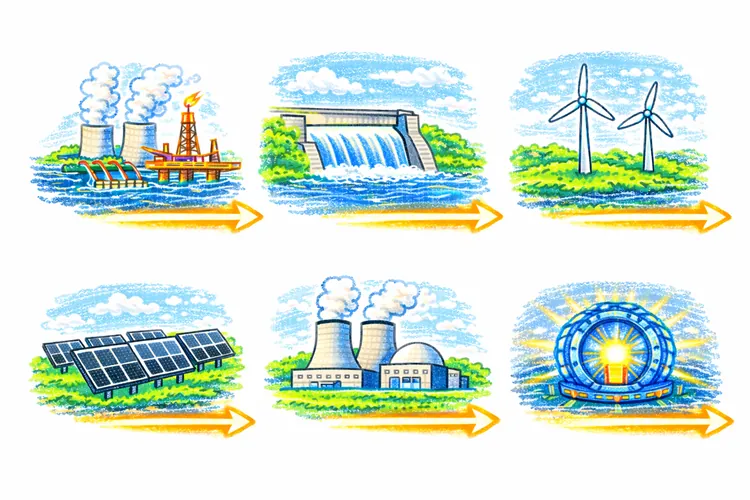
Modern electricity systems rely on a diverse mix of technologies.
Fossil-fuel power plants
Coal and gas plants convert chemical energy into electricity.
They are flexible and scalable, but carbon-intensive.
Natural gas in particular often acts as a bridge fuel, backing up other power sources when demand spikes.
Hydropower
Hydroelectric plants convert the energy of flowing water into electricity.
They are among the most reliable sources of power and often operate for many decades.
Their main limitations include geography, environmental concerns, and water availability.
Wind power
Wind turbines generate electricity from moving air.
They can scale rapidly and have become cost-competitive in many regions.
Their main challenge is variability — wind power depends on weather conditions.
Solar power
Solar panels convert sunlight directly into electricity.
They are modular, rapidly deployable, and have experienced dramatic cost reductions.
But solar generation follows daylight rather than consumption patterns.
Nuclear power
Nuclear plants generate electricity through fission reactions.
They provide large volumes of stable, low-carbon electricity independent of weather conditions.
However, they are capital-intensive, slow to build, and politically sensitive.
Emerging and niche sources
Other technologies — geothermal, biomass, tidal, and wave power — play smaller roles globally.
They add diversity and resilience rather than dominating generation.
A System Growing More Complex
What is striking today is not just the number of energy technologies — but their interdependence.
Modern electricity systems must balance:
- variable renewable generation
- constant consumer demand
- storage technologies
- transmission networks
- real-time coordination
Simply adding more generation capacity does not automatically ensure enough electricity.
Increasingly, the constraints lie in systems and infrastructure, not just energy sources.
Why This Series Exists
Since 2000, global electricity consumption has roughly doubled — and demand continues to rise.
At the same time, societies aim to:
- reduce emissions
- maintain reliability
- keep energy affordable
- avoid supply disruptions
These goals often conflict.
This series does not advocate a single technology.
Instead, it explores the economic and systemic transformation of global energy.
The Central Question
The key question is not:
“Which energy source will win?”
The real question is:
Can humanity build and manage an electricity system large and reliable enough for the century ahead?
Everything that follows in this series — oil, renewables, nuclear, fusion, grids, prices, and scarcity — connects back to that single question.