
Economics Is Not an Exact Science
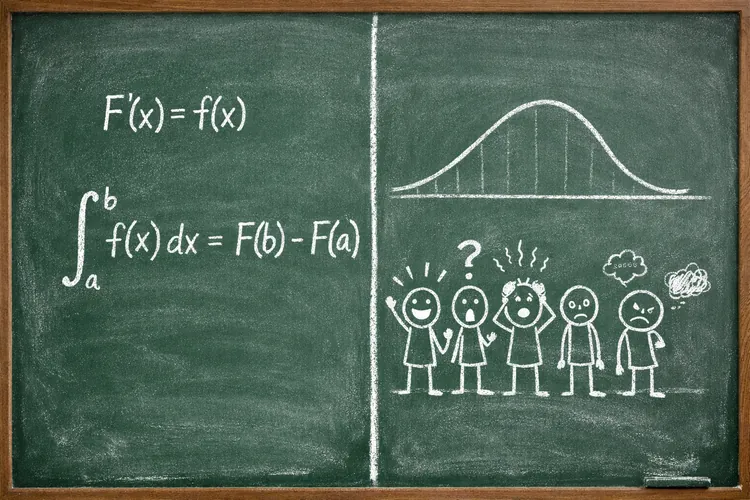
We grow up trusting numbers.
In school we learn that if we follow the rules, we get the right answer.
Two plus two equals four. Always.
Physics behaves the same way.
Gravity does not change because someone disagrees with it.
So when we see economics filled with charts, models, and equations, we instinctively treat it like mathematics.
If the model looks precise, the conclusion must be reliable.
But this is where the mistake begins.
Economics does not study particles or abstract symbols.
It studies people.
And people are unpredictable.
They panic when headlines appear.
They imitate others.
They change plans based on expectations, rumors, or emotions.
This makes economics fundamentally different from exact sciences.
In physics, the object being studied does not react to the theory describing it.
A falling object does not change direction because someone predicted gravity.
In economics, the opposite happens.
Predictions influence behavior.
Warnings about inflation may cause people to spend faster.
Forecasts of recession may cause businesses to cut investment.
The prediction itself becomes part of the system.
This is why two economists can examine the same data and reach opposite conclusions.
It is not incompetence.
It is the nature of the field.
Economics deals with incentives, expectations, trust, and institutions.
These are not constants.
They shift with culture, politics, and history.
Calling economics “imprecise” is not criticism.
It is a reminder of what kind of knowledge economics provides.
Economics does not deliver certainty.
It offers informed uncertainty.