
The Week I Learned the Difference Between Being Paid and Being Free!
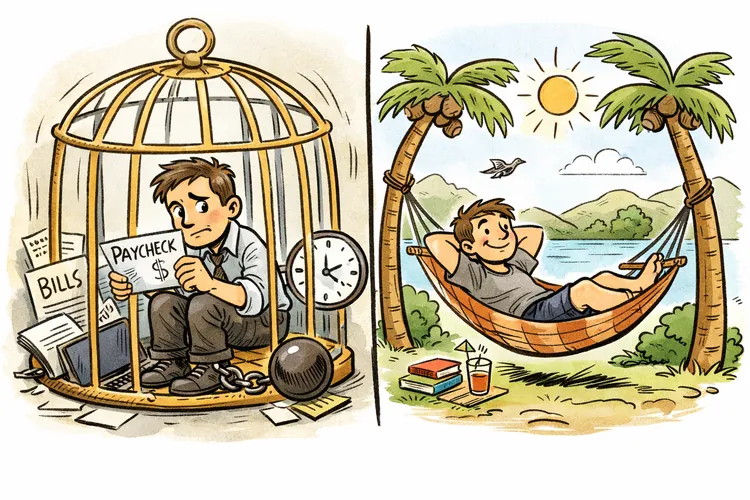
The Week I Learned the Difference Between Being Paid and Being Free
I used to think financial success was obvious. It looked like a higher income, nicer choices, and the ability to say “yes” without checking your balance first. When I finally reached a level where money was no longer a daily emergency, I expected peace to arrive automatically.
Instead, something stranger happened.
The stress didn’t disappear. It just changed its shape.
That week started normally. Work was busy, but manageable. I had bills covered. I had a little buffer. I even felt proud that I wasn’t “struggling” the way I used to. Then one small thing went wrong—nothing dramatic, nothing catastrophic. A timing issue. A delayed payment. A surprise expense that wasn’t huge, just inconvenient.
And I felt it immediately. That familiar tightness in the chest. The mental math. The sudden urgency.
It bothered me more than it should have, and that’s what scared me.
Because on paper, I was doing fine. From the outside, life looked stable. But inside, one imperfect week was enough to shake me. That’s when I realized I had confused being paid with being free.
Being paid is when money comes in reliably enough to handle your current lifestyle. It’s relief. It’s comfort. It’s the ability to keep the machine running.
Being free is different. Freedom is when the machine doesn’t require constant input to survive. Freedom is margin. It’s resilience. It’s the ability to absorb friction without panic.
That moment forced a hard question: if one disruption can destabilize you, are you secure—or are you just maintaining?
The truth is, a high income can hide fragility. It can make you feel powerful while quietly increasing the cost of your life. The more you upgrade automatically, the more your monthly baseline rises. The more your baseline rises, the less room you have for error. And the less room you have for error, the more your mind stays on alert.
That’s why some high earners still feel anxious. Not because they don’t make enough, but because they’ve built a life that needs them to keep winning.
I started paying attention to what was really creating pressure. It wasn’t only expenses—it was expectations. The expectation that I should always be progressing. The expectation that life should look a certain way. The expectation that slowing down meant falling behind.
And then I noticed something important: the most peaceful people I knew weren’t always the highest earners. They were the ones with buffers. They were the ones whose lives didn’t crumble when timing shifted. They didn’t need everything to go perfectly to feel okay.
That’s when I understood the quiet power of structure.
Structure isn’t flashy. It doesn’t feel like success in the moment. Nobody celebrates the money you didn’t spend or the upgrades you postponed. But structure gives you something income alone can’t provide: stability that survives real life.
When you build margin—time margin, financial margin, emotional margin—you stop making decisions from urgency. You stop needing immediate relief. You stop letting your money choices be driven by stress.
And slowly, money becomes less emotional.
Not because you care less, but because you’re no longer living at the edge of your own system. You’re no longer trying to buy peace with the next paycheck. You’re building peace into the foundation.
The best part isn’t luxury. It’s not the label brands or the impressive milestones.
The best part is waking up without financial urgency.
Because that’s the moment you realize what real wealth feels like. It’s quiet. It’s steady. It doesn’t need to be seen.
Being paid is good. But being free is better.
And the shift doesn’t begin with making more money. It begins with building a life that can handle less-than-perfect weeks without fear.