
Are Digital Currencies Coming to the U.S. and Canada?
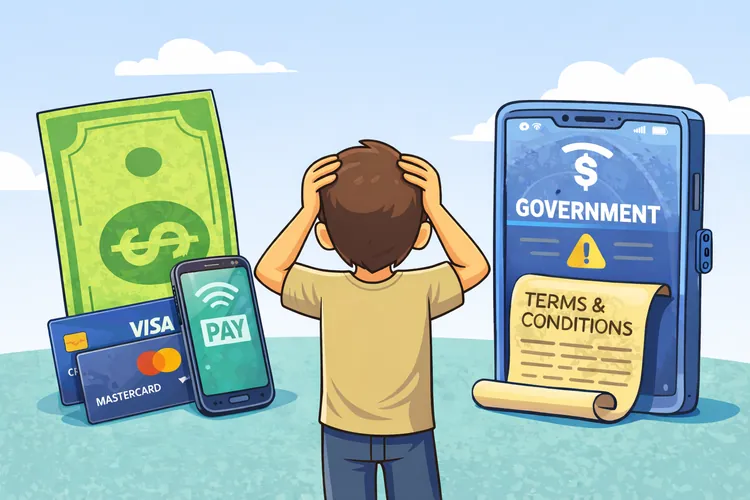
Over the last few years, the idea of digital money has quietly shifted
from science fiction to government policy.
Not crypto.
Not private payment apps.
We’re talking about central bank digital currencies — CBDCs.
Money issued directly by the state,
fully digital,
and programmable.
So the obvious question is:
Are the U.S. and Canada heading in that direction?
What Already Exists Around the World
This is not a theoretical discussion anymore.
China has already launched the digital yuan, now used in multiple cities and pilot programs.
Russia has announced plans to launch a digital ruble this year.
Dozens of other countries are testing or developing their own versions.
The motivation is similar everywhere:
- Faster payments
- Lower transaction costs
- More control over the monetary system
In other words: efficiency and visibility.
What About the U.S. and Canada?
Both countries are moving much more cautiously.
The Federal Reserve has researched a digital dollar, but repeatedly stresses that no launch is imminent.
Canada’s central bank has explored a digital Canadian dollar, but says it would only be introduced if cash usage collapses or private digital money dominates.
This hesitation is not technical.
It is political and cultural.
Cash, privacy, and individual freedom play a much bigger role in public debate in North America than in many other regions.
Why Governments Like Digital Currencies
From a government perspective, digital currencies are extremely attractive.
They allow:
- Instant transfers
- Direct stimulus payments
- Easier tax collection
- Reduced fraud
- Better enforcement of sanctions
In theory, they could also make the financial system more inclusive — giving access to people without traditional bank accounts.
Digital money gives policymakers precision tools instead of blunt instruments.
Why People Are Nervous About Them
The same features that make digital currencies powerful
also make them controversial.
A fully digital currency can be:
- Tracked
- Frozen
- Limited
- Programmed with conditions
Spending restrictions.
Expiration dates.
Targeted controls.
None of this has to happen — but all of it becomes possible.
That’s why critics worry not about technology, but about precedent.
Once cash disappears, there is no offline alternative.
No anonymous fallback.
No exit.
The Real Trade-Off
The debate is often framed as progress vs paranoia.
That framing is misleading.
The real trade-off is:
> Efficiency vs autonomy.
Digital currencies could make economies faster and cleaner.
They could also make money less neutral and more political.
This doesn’t mean digital currencies are inevitable — or evil.
But it does mean the decision matters more than it seems.
Especially in societies that value personal freedom and decentralized power.
So What’s Likely to Happen?
In the U.S. and Canada, digital currencies are unlikely to arrive suddenly.
What’s more probable:
- Long pilot programs
- Limited use cases
- Strong legal safeguards
- Continued coexistence with cash
Not a revolution.
A slow, careful evolution.
The question is not whether technology allows it.
It already does.
The question is whether society wants it — and on what terms.